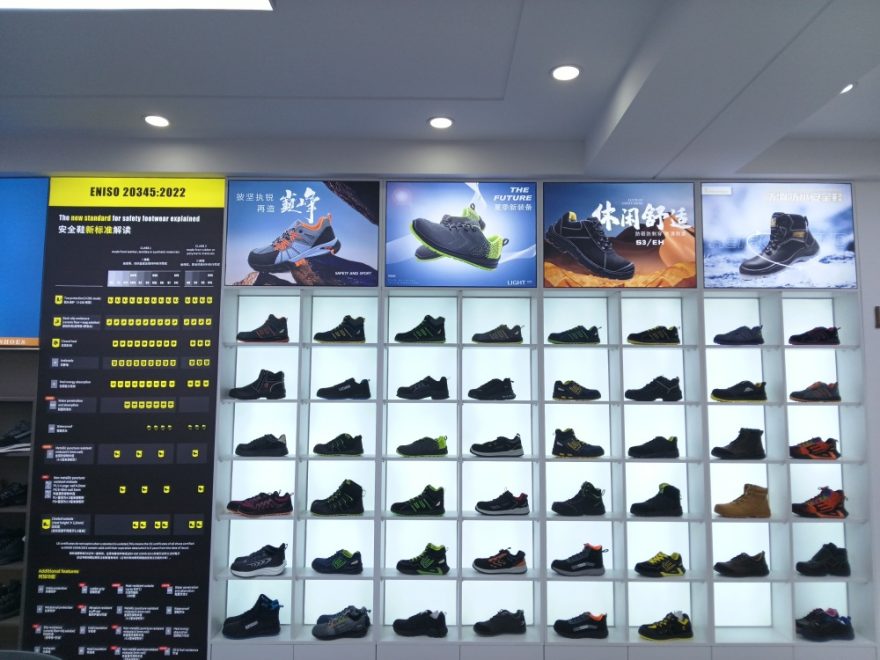
In the safety footwear industry, CE certification is often the first thing European buyers ask about. However, many importers have discovered—sometimes too late—that not every CE certificate they receive is genuine.
Over the past few years working with safety shoe production and export documentation, I’ve seen several situations where buyers trusted certificates that later turned out to be invalid or misleading. In most cases, the problem wasn’t fraud in the dramatic sense. It was usually a misunderstanding of how CE certification for safety footwear actually works.
The reality is that CE certification for safety footwear under EN ISO 20345 is not just a simple test report. It is a structured compliance process involving approved laboratories, technical documentation, and controlled production.
Many buyers receive a “CE certificate” in PDF format and assume the product is compliant. But a single PDF document does not automatically prove compliance with European regulations.
One common situation is when factories provide test reports instead of actual EU Type Examination Certificates. A test report only shows that a sample was tested. It does not mean the product has passed the formal CE certification procedure.
Another frequent issue is certificates issued by organizations that are not Notified Bodies under EU regulation. Only authorized Notified Bodies can issue valid CE Type Examination certificates for PPE products such as safety footwear.
In some cases, the certificate itself is real—but it does not belong to the product being offered. The style number, construction, or materials may differ from the tested model. This is more common than many buyers expect.
From a factory perspective, legitimate certification involves several steps: product testing according to EN ISO 20345, technical documentation, and formal approval by a Notified Body. The certificate must clearly reference the tested model and remain within its validity period.
Buyers can avoid most risks by verifying three key points before placing an order.
First, check whether the issuing organization is listed in the EU NANDO database as a Notified Body for PPE. If the testing laboratory is not registered there, the certificate should be treated with caution.
Second, verify that the model description in the certificate matches the product being purchased. Details such as outsole type, toe cap material, and protection level (S1, S1P, S3, etc.) should align with the technical file.
Third, ask for the full test report or technical documentation, not only the certificate page. A complete certification package usually includes multiple pages of test data.
In serious supply chains, buyers also request ongoing production control or periodic testing to ensure that mass production remains consistent with the tested sample.
Fake or misleading CE certificates are not only a compliance risk—they can create legal liability if the product fails in the field. For importers selling PPE in Europe, product responsibility ultimately rests with the importer, not the manufacturer.
For that reason, verification before production is always cheaper than solving a compliance problem after shipment.
In my experience working with safety footwear exports, the best buyers treat CE certification not as a document to collect, but as part of a controlled product development and compliance process.
FAQ
1. What is the difference between a CE certificate and a test report for safety footwear?
A CE certificate (EU Type Examination Certificate) confirms that a product has passed the formal PPE certification process. A test report only shows the results of laboratory testing on a sample and does not automatically grant CE compliance.
2. How can I check if a CE certificate is genuine?
You can verify the issuing organization in the EU NANDO database to confirm whether it is an authorized Notified Body for PPE certification.
3. Can one CE certificate be used for multiple safety shoe models?
Not usually. Certificates apply only to the tested design and construction. Significant changes in materials, outsole, or structure may require new testing.
4. Who is responsible if a CE-certified safety shoe fails in the European market?
Under EU regulations, the importer placing the PPE product on the European market holds legal responsibility for compliance.
5. How often should safety footwear be re-tested?
Many buyers require periodic verification tests or production control checks to ensure that mass production remains consistent with the certified sample.
- Top 10 Risks When Importing Safety Shoes from China
- How Chinese Factories Handle OEM Safety Shoes Orders?
- Key Materials Used in Modern Safety Footwear
- Typical Production Timeline for Safety Shoes Orders
- From Raw Materials to Finished Safety Boots: What Really Happens Inside a Chinese Factory?
- Safety Shoes Industrial Clusters in China Explained — From My Perspective