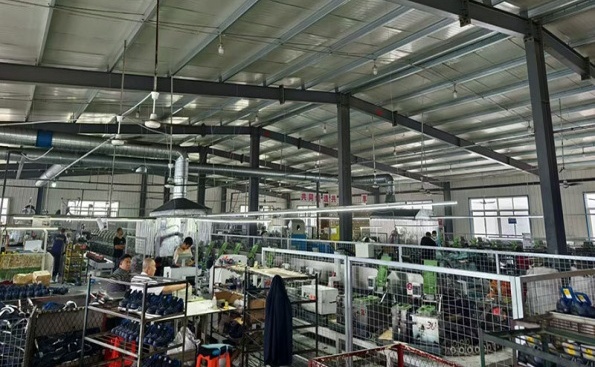
There’s a moment in every order that most buyers never really see, but it quietly decides whether the shipment will go smoothly or turn into a problem.
It’s not the quotation stage.It’s not even the sample approval.It’s the pre-production meeting.
From the outside, it sounds procedural — just another step before production starts. But from where I stand, working inside a typical Chinese safety shoe factory, this meeting feels more like a pressure point. Everything that has been promised to the customer is about to collide with what the factory can actually deliver.And those two things are not always the same.
Where Things Start to Drift
By the time we reach this meeting, the order already looks “confirmed.” The sample has been approved, the price has been negotiated, and the delivery date is written down.
But inside the factory, nothing has truly started yet.Materials may still be in transit. Some components might be substituted quietly if purchasing thinks it’s “close enough.” The production team may not have seen the final version of the tech pack. Even something as basic as labeling instructions can exist in two slightly different versions.
On paper, everything is aligned. In reality, small gaps are already forming.The pre-production meeting is supposed to close those gaps. But whether it actually does depends on how seriously it’s taken.
What Doesn’t Get Said Out Loud
In many factories, including ones I’ve worked in, the meeting often looks smooth on the surface. Sales explains the order, production nods, quality control adds a few comments, and everyone moves on.But underneath that calm, there are usually questions no one wants to raise.
The production supervisor may already know the delivery time is tight. The material might not be as stable as expected. The stitching process could be more difficult to control in bulk than it was in sampling.
Still, people stay quiet.Not because they don’t see the problem — but because speaking up can slow things down, and slowing things down is often discouraged.This is where risk quietly enters the order.
The Details That Actually Matter
From my experience, most serious problems don’t come from big mistakes. They come from small details that were never fully clarified.
Take materials, for example. It’s not enough that they “look the same” as the sample. What matters is whether they behave the same in production. A slightly different density in the outsole, or a minor change in upper material, can affect durability, bonding strength, or even compliance with safety standards.
According to internal quality systems, materials should be tested and verified before production begins . But in reality, testing is sometimes rushed or assumed based on previous batches.
Packaging is another area people underestimate. For safety shoes shipped to Europe or humid regions, anti-mold measures are not optional. Moisture control, proper use of desiccants, and storage conditions all need to be handled carefully. These are clearly defined in quality procedures, but if they are not reinforced during this meeting, they can easily be overlooked later.
And once the shoes are inside a container for 30–40 days, there is no second chance.
Why This Meeting Is More Important Than Inspection
Many buyers rely heavily on final inspection, thinking it’s the ultimate safeguard.But by the time inspection happens, the cost of any mistake is already built into the product.
If there’s a misunderstanding about labeling, it’s already printed on thousands of boxes.
If there’s a material issue, it’s already molded into every outsole.
If workmanship is inconsistent, it’s repeated across the entire production run.
Inspection can only catch problems — it can’t prevent them.And under AQL standards, even a limited number of defects can lead to rejection or negotiation pressure . What looks like a “small issue” in the factory can quickly become a shipment-level risk.
That’s why, from a practical point of view, the pre-production meeting carries more weight than most people realize.
How I Personally Approach It Now
Over time, I’ve stopped treating this meeting as a routine step.Instead, I see it as a moment to quietly verify reality against expectation.I don’t just listen to what is being said — I pay attention to what is not being discussed. If a detail feels unclear, I try to trace it back to the sample or the original requirement. If something sounds too optimistic, I check it against the factory’s actual capability.
Because once production starts, everything moves fast. Workers follow instructions, machines keep running, and decisions made earlier become difficult to reverse.At that point, even a small misunderstanding can turn into thousands of identical problems.
From the outside, a pre-production meeting looks simple. Just a discussion before production.But inside the factory, it’s something else entirely.It’s the moment where assumptions are either corrected — or silently carried forward.And in safety shoe manufacturing, those silent assumptions are often what come back later as claims, delays, or lost trust.
FAQ
1. What is the main goal of a pre-production meeting in safety shoe manufacturing?
The main goal is to ensure that all departments clearly understand the order requirements before mass production begins, reducing the risk of mistakes during bulk production.
2. Why do problems still happen even after sample approval?
Because samples are made under controlled conditions, while bulk production involves different materials, workers, and time pressure. Small differences can lead to larger issues.
3. How does a pre-production meeting affect product quality?
It directly impacts consistency. If materials, processes, or standards are not clearly confirmed, defects are likely to be repeated throughout the entire order.
4. Can final inspection replace the need for a strong pre-production meeting?
No. Inspection can only identify problems after production. It cannot prevent issues that originate from unclear instructions or miscommunication.
5. What should buyers pay attention to during this stage?
Buyers should focus on material confirmation, production feasibility, labeling details, and packaging requirements, especially for export conditions like humidity and long shipping times.
- Factory Direct vs Trading Company: What Importers Should Know?
- Common Mistakes New PPE Importers Make
- How to Verify a Safety Shoes Manufacturer ?
- Why Sample Quality Is Different from Bulk Production?
- Why Relying Only on Final Inspection Is a Hidden Risk in Safety Shoe Manufacturing?
- How to Avoid Fake CE Certificates for Safety Footwear?
- Top 10 Risks When Importing Safety Shoes from China
- How Chinese Factories Handle OEM Safety Shoes Orders?