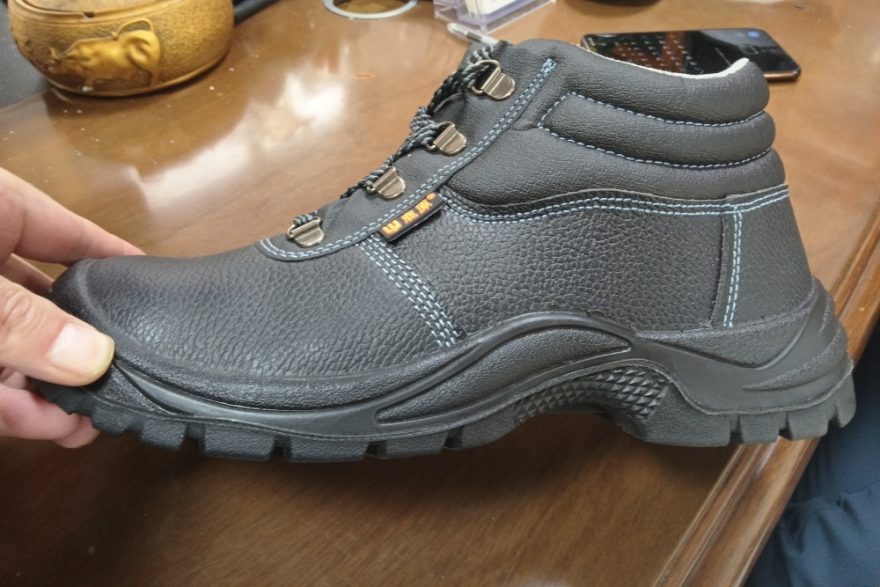
When I first started working with safety shoe factories, I thought quality control was mostly about final inspection.Check a few cartons, follow AQL, sign the report, and ship.It looked simple.But after spending time inside production lines, I realized something uncomfortable:by the time you are doing final inspection, most quality problems are already too late to fix.
If you are importing safety footwear, especially from Asia, understanding where problems actually start will save you far more money than just relying on inspection reports.
Quality problems rarely start at the end
One thing I see again and again is this:The defect that shows up during inspection usually started much earlier.A sole coming off after a few weeks?That’s not a “random defect.” It’s often bonding or curing control during production.
Waterproof failure?Usually not the membrane itself — but how it was applied.
Uneven sizes or fitting complaints?Often linked to cutting or lasting inconsistency, not just the last design.
From the outside, these all look like product issues.Inside the factory, they are process issues.And process issues don’t fix themselves at the final stage.
The real checklist starts before production
Most importers focus on checking finished goods.But if I had to prioritize, I would start earlier.Before production even begins, I always want to know:whether materials are stable/whether suppliers are consistent/whether the factory has done trial production properly
For example, “genuine leather” doesn’t mean much if thickness varies across batches.
A steel toe cap is only reliable if it comes from a controlled supplier, not whoever offers the lowest price that week.This part is rarely visible in catalogues, but it decides whether your bulk order will be stable or not.
During production is where control really happens
If you walk into a factory mid-production, you can usually tell very quickly how things will end.Not by looking at finished shoes — but by watching the line.
Are workers adjusting machines when something feels off?
Is there someone checking bonding strength, not just appearance?
Do supervisors stop the line when needed, or keep pushing output?
I’ve seen cases where a stitching issue was noticed early, but nobody reported it.Production continued for days.By the time QC stepped in, thousands of pairs were already affected.At that point, the conversation is no longer about quality — it’s about delay, rework, and cost.
Final inspection is a confirmation, not a solution
Many buyers rely heavily on pre-shipment inspection.I understand why. It feels like control.But in reality, inspection is more like a final checkpoint, not a fixing tool.If your product fails at this stage, your options are limited:rework under time pressure/delay shipment/or ship with risk
None of these are good outcomes.A stable supplier should already have controlled most issues before the inspector arrives.
The part most checklists don’t mention
There is one thing I didn’t appreciate before working inside factories:how people react to problems matters more than the problems themselves.
In some factories, workers stay silent when something goes wrong.They don’t want to be blamed or slow down production.
In others, even small issues are reported early.This creates two completely different outcomes.In the first case, problems grow quietly.In the second, they get solved while still small.If you’re importing regularly, this difference will show up very clearly after a few orders — especially in consistency and delivery reliability.
What actually works in real sourcing
Over time, I’ve found that good quality control is less about checking more, and more about checking earlier.When problems are found early:they are cheaper to fix/they don’t affect the whole order/and communication with buyers is still manageable
When they are found late, even small defects become business risks.So instead of asking only for inspection reports, I usually try to understand how the factory handles problems during production.That tells me much more about future orders than any single report.
Safety footwear is not a simple product.It looks standardized, but the consistency behind it depends on materials, process control, and how people inside the factory deal with issues.If you only look at the final result, you’re seeing the last step of a much longer story.And by then, most of the important decisions have already been made.
FAQ
1. Is final inspection enough to guarantee quality?
Not really. It can confirm quality, but it can’t control it. Most issues originate earlier in production.
2. What is the most common hidden problem in safety shoes?
Bonding and material inconsistency. These don’t always show during inspection but appear after use.
3. How can I reduce quality claims when importing safety shoes?
Work with suppliers who control production processes well and report issues early, not just those who pass inspections.
4. Are certifications like CE or ASTM reliable indicators of quality?
They are necessary, but they only reflect tested samples, not full production consistency.
5. What should I ask a supplier before placing an order?
Ask how they handle problems during production, not just what certifications they have.
- Factory Direct vs Trading Company: What Importers Should Know?
- Common Mistakes New PPE Importers Make
- How to Verify a Safety Shoes Manufacturer ?
- Why Sample Quality Is Different from Bulk Production?
- Why Relying Only on Final Inspection Is a Hidden Risk in Safety Shoe Manufacturing?
- How to Avoid Fake CE Certificates for Safety Footwear?
- Top 10 Risks When Importing Safety Shoes from China
- How Chinese Factories Handle OEM Safety Shoes Orders?