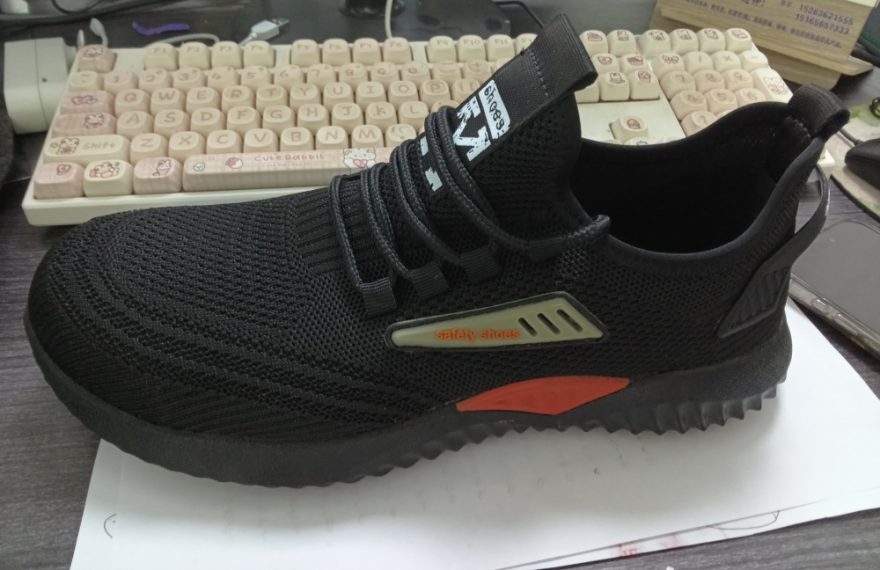
If you work in construction, logistics, warehouses, factories, or mining, you’ve probably heard the same complaint again and again:
“The shoes looked fine when they arrived. Three months later, the sole cracked, the upper split, or the inside collapsed.”
As someone working closely with safety shoe production in China, I can say this honestly: most cheap safety shoes do not fail because workers use them too hard. They fail because invisible cost-cutting decisions were already built into the shoe long before shipment.
And the problem is getting worse.
Many importers focus heavily on getting the lowest FOB price. On paper, reducing a pair from $14 to $10 looks like a smart business decision. But in real use, that extra $4 often disappears inside downgraded materials, unstable outsole formulas, weak stitching standards, and rushed production schedules.
The customer usually only discovers the truth after the shoes reach the job site.
A Real Case From a Low-Cost Order
Last year, a buyer from Eastern Europe contacted several factories looking for an extremely aggressive price on a basic S1P safety shoe. The target price was almost unrealistic for genuine industrial use.
A few factories rejected the project immediately.
Others accepted it.
The final product looked acceptable in photos. Steel toe? Yes. Anti-slip outsole? Claimed. Nice catalog images? Also yes.
But after around 10–12 weeks of daily use, the complaints started arriving.
Workers reported:
- outsole separation near the flex point
- lining tearing around the heel
- insoles collapsing flat
- toe cap pressure becoming uncomfortable
- upper leather cracking after repeated bending
The buyer initially blamed the workers. Then blamed shipping conditions. Eventually, they cut open several returned pairs and discovered the actual issue.
The shoes had been engineered only to survive inspection — not long-term wear.
That difference matters more than most buyers realize.
The Hidden Cost-Cutting Most Buyers Never See
Cheap safety shoes rarely fail because of one dramatic mistake. Usually, failure comes from many small reductions happening together.
A factory may replace thicker genuine leather with thinner split leather coated heavily with paint. On day one, the shoe still looks premium. After several weeks, the coating begins cracking at the flex area.
Another common shortcut is the outsole compound.
In low-end PU injection production, some suppliers increase filler content to reduce material cost. The outsole becomes harder and less flexible. Initially this is difficult to notice, but after repeated bending in cold or wet environments, cracking becomes much more likely.
The same thing happens inside the shoe.
Low-density foam collapses quickly. Cheap mesh lining wears through faster. Weak heel counters lose shape. Even thread quality matters more than many importers think.
From the outside, two safety shoes may appear almost identical.
Internally, they can be completely different products.
Why the First Sample Often Looks Better Than Bulk Production
This is one of the biggest misunderstandings in the safety footwear business.
The confirmation sample is usually produced slowly, carefully, and with better material control. The production team knows the buyer will inspect it closely.
Bulk production is different.
When factories face extremely low target prices, tight deadlines, or unstable material suppliers, consistency becomes difficult. Some factories quietly change suppliers during production to protect margins.
This is why experienced buyers care less about one beautiful sample and more about production stability.
A serious factory builds systems around quality control, material testing, humidity management, outsole bonding strength, and inspection procedures. A low-cost workshop often focuses only on shipment speed.
In many professional factories, defect classification systems and AQL inspections are used to control issues before shipment. Problems like outsole bonding defects, stitching irregularity, mold contamination, incorrect hardness, or packaging moisture are monitored carefully during production.
Factories serving long-term European buyers usually understand that durability problems destroy customer trust much faster than slightly higher pricing.
The “3-Month Failure” Pattern Is Predictable
Interestingly, many cheap safety shoes fail at almost the same time.
Not after one week.
Not after one year.
Usually after 2–4 months of real industrial use.
Why?
Because that’s roughly how long low-grade materials can survive repeated stress before fatigue becomes visible.
This is especially common in:
- low-cost PU/PU safety shoes
- fake nubuck or painted split leather
- thin mesh sport safety shoes
- low-density insoles
- recycled outsole compounds
- rushed cemented construction
The shoe survives warehouse inspection, container shipping, and initial customer delivery.
Then reality begins.
Workers flex the shoe thousands of times. Sweat enters the lining. Heat changes the foam structure. Moisture affects bonding. Eventually, the weakest component fails first.
And once one part breaks down, the rest usually follows quickly.
Cheap Safety Shoes Can Become Expensive Very Fast
Some buyers still believe the cheapest pair always creates the highest margin.
But in practice, returns, reputation damage, distributor complaints, and lost customers often cost far more.
Especially in Europe, the Middle East, and industrial sectors in Africa, buyers are becoming more cautious about extremely cheap PPE products.
End users today leave photos online. They post videos. They compare brands publicly.
A distributor may save $2 per pair initially but lose an entire customer account later because workers no longer trust the product.
That’s why experienced importers increasingly ask deeper questions:
- What leather thickness is actually used?
- Is the outsole virgin PU or high recycled content?
- What is the flex testing standard?
- How is humidity controlled during packing?
- Are random production tests performed?
- Is the factory stable across repeat orders?
Those questions matter more than the catalog design.
What Smart Buyers Do Differently
The best buyers are not always the ones paying the highest price.
They are the ones controlling risk properly.
Instead of chasing the absolute cheapest quotation, they try to identify the minimum acceptable quality level for real working conditions.
A warehouse shoe used indoors is different from a heavy construction boot used outdoors in winter conditions.
Professional buyers also understand something many new importers miss:
Consistency is more valuable than one cheap order.
A stable factory relationship often produces better long-term profit than constantly switching suppliers for lower prices.
Because in safety footwear, product failure does not only damage the shoe.
It damages trust.
And once workers stop trusting safety equipment, the brand behind it becomes difficult to recover.
FAQ
Why do cheap safety shoes crack so quickly?
Usually because of low-grade outsole compounds, excessive filler material, poor flexibility, or weak bonding between the upper and sole. Repeated bending and moisture exposure accelerate the failure.
How long should good safety shoes last?
It depends on the work environment, but quality industrial safety shoes normally last far longer than 3 months under standard daily use. Heavy construction environments naturally reduce lifespan faster.
Are all made-in-China safety shoes low quality?
No. China produces both very low-end and very high-quality safety footwear. The real difference comes from material standards, factory management, quality control systems, and buyer price expectations.
Why do safety shoe samples sometimes look better than production orders?
Because samples are often made carefully using selected materials, while mass production may involve different suppliers, rushed schedules, or downgraded components to meet target pricing.
What is the biggest mistake importers make when buying safety shoes?
Focusing only on FOB price instead of total risk. Returns, complaints, failed inspections, and reputation damage can easily cost more than the initial savings.
How can buyers reduce quality problems in safety shoe imports?
Work with factories that have stable QC systems, perform production inspections, control material consistency, and communicate transparently about realistic pricing and performance expectations.
- EN ISO 20345 Explained for Safety Shoes Buyers
- Why Production Delays Happen in Safety Shoes Orders?
- How Safety Shoe Factories Reduce Production Costs ?
- Common Quality Problems in Safety Boots
- Inline Inspection vs Final Inspection: What Really Matters in Safety Shoe Manufacturing?
- Pre-Production Meeting in Safety Shoes Manufacturing — What I’ve Learned Standing Between Sales and the Factory Floor
- AQL Inspection in Safety Footwear Production: What It Really Means on the Factory Floor?
- Safety Shoes Quality Control Checklist for Importers