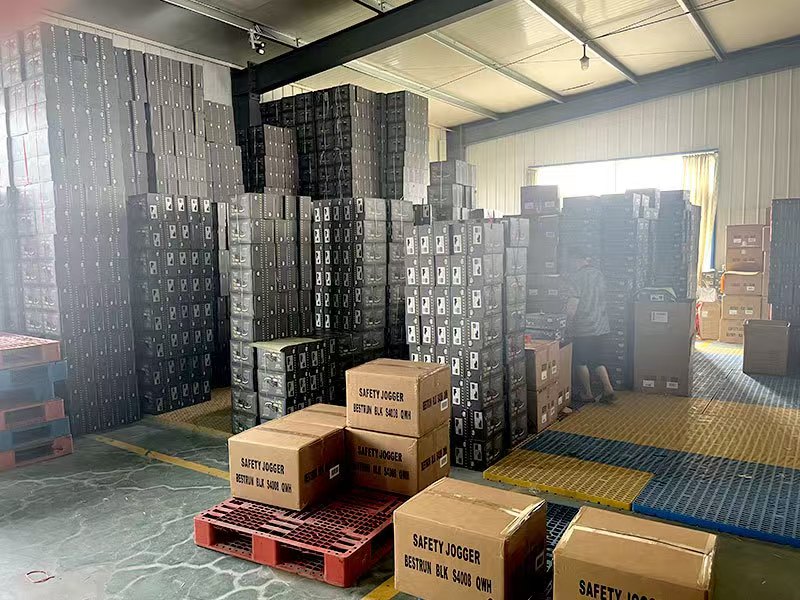
Most importers worry about delayed shipments, wrong labeling, or failed lab tests.
But in the safety shoe business, one of the most expensive problems often starts quietly — inside the container itself.
No broken cartons.
No customs issue.
No visible damage during loading.
Just moisture.
I learned this lesson after dealing with a container of safety shoes shipped during the rainy season from North China to Europe. Everything looked normal when the goods left the factory. Final inspection passed. Cartons were dry. The factory even added silica gel bags.
But when the customer opened the container weeks later, several cartons near the container walls already showed signs of moisture damage. Some shoe boxes were soft. A few pairs had mold spots around the collar foam and tongue stitching. Metal eyelets started showing tiny rust marks.
The customer’s first message was simple:
“We cannot sell these shoes in this condition.”
That sentence can easily turn a profitable order into a financial disaster.
In the safety footwear industry, moisture damage is more dangerous than many factories realize because safety shoes contain multiple materials that react differently to humidity during sea transportation.
PU midsoles absorb moisture differently than rubber.
Steel toe caps create temperature differences inside the shoe.
Foam collars trap humidity.
Thick insoles slow down evaporation.
Even carton paper itself becomes a moisture source during long transit.
The real problem usually starts with container condensation.
When containers move between hot and cold environments during ocean shipping, moisture in the air turns into water droplets on the container ceiling and walls. In logistics, many people call this “container rain.”
Those droplets eventually fall onto cartons.
Factories often believe adding a few desiccant bags is enough. In reality, moisture protection starts much earlier — sometimes from material storage itself.
I’ve visited factories where upper materials were stored directly against warehouse walls during humid weather. Some carton suppliers delivered packaging that already contained excess moisture. In a few cases, finished shoes were packed immediately after adhesive processes without enough drying time.
Everything looked acceptable during loading.
But after 35 to 45 days at sea, the problems appeared.
What makes this issue worse is that buyers usually don’t care whether the moisture came from the factory, the shipping company, or the weather. From the customer’s perspective, the supplier is responsible for the final condition of the goods.
And moisture claims are difficult to argue against because mold and humidity damage immediately affect trust.
Especially in Europe, damaged packaging alone can create problems for distributors and retailers. Safety footwear is often sold through industrial distributors, PPE suppliers, or chain stores. Once cartons look wet or moldy, many buyers assume the product quality itself is unsafe.
In some cases, even if only 5% of cartons are affected, the customer may reject the full shipment.
That is why experienced safety shoe factories treat moisture prevention as part of quality control, not just shipping preparation.
In our industry, the factories that consistently reduce moisture claims usually follow several habits quietly:
They keep warehouse humidity under control during production season.
They never place cartons directly on concrete floors.
They inspect containers carefully before loading, especially container roof condition and corner rust.
They avoid rushing packing after rainy-day production.
And they use container desiccants based on shipping route and transit time — not just “standard quantity.”
Some international buyers already include anti-mold and anti-moisture requirements directly inside their supplier manuals. Even simple details like carton moisture level, container inspection records, or desiccant placement may become part of audits and claim investigations.
I’ve also noticed that moisture problems increase sharply on certain routes:
- China to Northern Europe during winter
- Rainy season shipments from South China
- Long transit shipments to South America
- Containers stuck at transshipment ports for weeks
Ironically, cheaper factories often suffer the biggest losses from moisture claims because they try to save money on storage conditions, packaging quality, or drying procedures.
But one rejected shipment can easily cost far more than years of prevention expenses.
For buyers sourcing safety shoes from Asia, moisture control is not a “small factory detail.” It is part of supplier reliability.
And for factories, preventing container moisture damage is not only about protecting shoes.
It is about protecting reputation.
Because buyers may forgive late delivery once.
But they rarely forget mold.
FAQ
Why do safety shoes easily develop mold during shipping?
Safety shoes contain foam, fabric lining, glue, insoles, and sometimes leather components that can trap moisture during production and sea transportation. Long ocean transit and temperature changes inside containers increase condensation risk.
What is “container rain” in footwear shipping?
“Container rain” refers to condensation forming inside shipping containers when temperatures change during transport. Water droplets form on container ceilings and fall onto cartons and products.
Can silica gel alone prevent moisture damage in containers?
Not always. Silica gel helps, but moisture prevention also depends on warehouse humidity, drying time after production, carton moisture level, container condition, and shipping route duration.
Which safety shoe materials are most sensitive to humidity?
Foam collars, fabric linings, certain insoles, carton packaging, and metal accessories are especially sensitive. Moisture can also affect adhesives and create odor or mold issues.
How do professional safety shoe factories reduce moisture claims?
Experienced factories usually combine dry warehouse storage, controlled packing conditions, container inspection, anti-mold treatment, desiccants, and proper ventilation management before loading.
Why do European buyers care so much about wet cartons?
Wet or moldy cartons affect retail presentation, distributor confidence, and product safety perception. In PPE markets, damaged packaging can reduce trust in the entire shipment.
- Why a Small Stitching Issue Turned Into a Full Container Claim?
- The Real Reason Cheap Safety Shoes Fail After 3 Months
- EN ISO 20345 Explained for Safety Shoes Buyers
- Why Production Delays Happen in Safety Shoes Orders?
- How Safety Shoe Factories Reduce Production Costs ?
- Common Quality Problems in Safety Boots
- Inline Inspection vs Final Inspection: What Really Matters in Safety Shoe Manufacturing?
- Pre-Production Meeting in Safety Shoes Manufacturing — What I’ve Learned Standing Between Sales and the Factory Floor