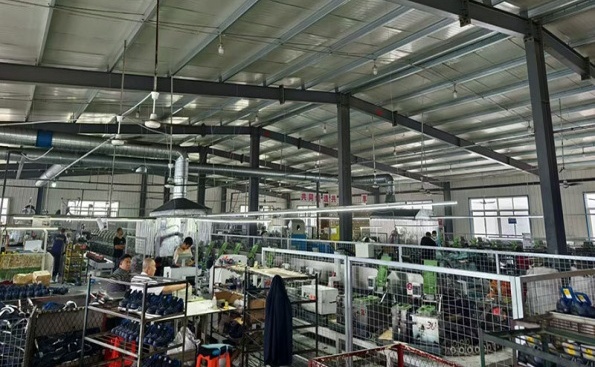
When importers first enter the safety shoes business, one of the earliest decisions they face is whether to work directly with a factory or go through a trading company. On paper, the answer often looks simple—factory means lower price, trading company means convenience. In reality, especially in China’s safety footwear clusters, the situation is far more nuanced.
I’ve worked inside small and mid-sized safety shoe factories long enough to see where things actually go wrong. And interestingly, many of those problems have nothing to do with whether you chose a factory or a trader—but how the system behind them is managed.
At first glance, factory-direct sourcing feels like the “smart buyer’s move.” You talk to the producer, skip the middle layer, and expect better pricing and control. That can be true, but only under one condition: the factory must have a stable internal system.
In many smaller factories, production relies heavily on human experience rather than structured processes. Quality control might exist, but not in a consistent or traceable way. For example, even when a factory claims to follow inspection standards, execution can vary depending on who is on shift that day. In some cases, critical checks—like labeling, packaging, or material consistency—are only caught at final inspection, which is already too late.
This is where importers often feel frustrated. The sample looks perfect, but the bulk production tells a different story. The gap is not intentional deception—it’s a system problem.
On the other side, trading companies are often misunderstood. Many importers assume traders simply add margin without adding value. That does happen. But experienced trading companies, especially those specialized in PPE or safety footwear, often act as a buffer between you and factory chaos.
A good trader is not just forwarding emails. They are coordinating production timelines, checking labeling compliance, arranging third-party inspections, and sometimes even filtering out factories that cannot meet basic certification requirements. In structured supply chains, there are clear steps: sample approval, material confirmation, inline inspection, and final AQL checks before shipment.
If a trader actively manages these steps, they are effectively selling risk reduction, not just products.
However, the risk with trading companies lies in transparency. Some traders do not control production at all—they outsource everything and simply pass information along. In such cases, when problems happen, responsibility becomes blurred. You may not even know which factory produced your goods.
From a practical standpoint, the decision should not be framed as “factory vs trading company,” but rather:
- Can this factory run a stable, repeatable system without me on-site?
- Or do I need a middle layer to manage risk and communication?
For new importers or those without a technical background in safety footwear, working with a capable trading company can actually reduce total cost—because it lowers the chance of defects, delays, and compliance failures.
For experienced buyers with strong quality control systems, factory-direct sourcing can offer better margins—but only after strict vetting and continuous monitoring.
In reality, many successful importers use a hybrid approach. They may source directly from factories but still rely on third-party inspectors or local agents to control production. Others start with trading companies and gradually transition to direct sourcing once they understand the supply chain.
The biggest mistake is assuming that “factory direct” automatically means better. In safety footwear, where compliance, testing, and consistency matter, the real advantage comes from control—not from who you buy from.
FAQ
1. Is factory-direct always cheaper than using a trading company?
Not necessarily. While unit price may be lower, hidden costs from quality issues, delays, or failed inspections can make factory-direct more expensive overall.
2. How can I verify if a factory is reliable?
Look beyond certificates. Check if they have a structured production and quality system, including material control, inline inspection, and final AQL processes.
3. When should I choose a trading company?
If you lack on-the-ground quality control, technical knowledge, or time to manage production, a competent trading company can reduce operational risk.
4. Can I switch from a trading company to factory direct later?
Yes, and many importers do. It’s often safer to start with a trader and transition once you understand the supply chain.
5. What is the biggest risk in safety shoe sourcing?
Inconsistent execution. Even if standards exist, poor implementation during bulk production is the most common cause of problems.
- Top 10 Risks When Importing Safety Shoes from China
- How Chinese Factories Handle OEM Safety Shoes Orders?
- Key Materials Used in Modern Safety Footwear
- Typical Production Timeline for Safety Shoes Orders
- From Raw Materials to Finished Safety Boots: What Really Happens Inside a Chinese Factory?
- Safety Shoes Industrial Clusters in China Explained — From My Perspective