People who are new to buying safety shoes from China often imagine the process is very simple. Send an order, wait a few days, and the boots are ready. In reality, it almost never works that way. Even in factories that produce safety footwear every day, a normal order still goes through several small steps before the shoes are packed into cartons and ready to ship.
From my experience working with safety shoe orders, the timeline usually depends on three things: the complexity of the style, whether the materials are already in stock, and how busy the factory is at that moment.
When a customer confirms an order, the first thing we usually do is double-check the specifications. Even if the customer already approved a sample before, we still review details again — upper material, outsole type, toe cap, midsole, sizes, logo, and packing requirements. Small misunderstandings here can cause big problems later, so most factories spend a day or two confirming everything before starting production.
After that comes the material preparation stage. Some materials are common and easy to find, like standard PU soles or steel toe caps. Others may require fresh purchasing. Leather, especially if the customer specifies a certain thickness or finish, sometimes needs several days to arrive from the supplier. If reflective tape, special insoles, or customized logos are involved, this stage can take longer.
In many Chinese safety shoe factories, material preparation usually takes around one week. In busy seasons it can be a bit longer.
Once materials arrive, cutting and stitching normally start first. The leather or microfiber is cut according to patterns, and then the upper is stitched together. At this stage the shoes still look like soft shells without soles. Workers attach lining, eyelets, reflective strips, and other components before the upper moves to the assembly line.
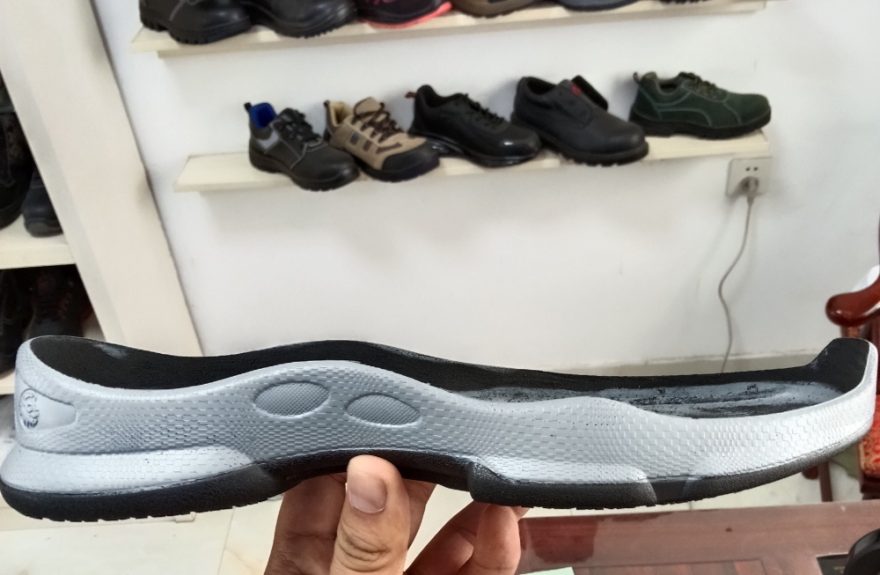
The assembly process is where the shoe finally begins to look like a safety boot. The steel toe cap is inserted, the upper is pulled over the last, and the outsole is attached. In many factories this is done through direct injection PU molding, while others may use cemented construction or rubber vulcanization depending on the design.
Assembly itself is usually quite fast. If the production line is dedicated to one style, hundreds of pairs can be finished in a day.
However, production is rarely the slowest part. Quality control and finishing often take additional time. After the shoes come off the line, inspectors check stitching, bonding, size accuracy, and appearance. Loose threads are trimmed, the surface is cleaned, and defective pairs are removed.
For export orders, packing is also done carefully. Customers often request specific carton sizes, barcode labels, or mixed size packing. Preparing cartons and palletizing can easily add another day or two.
Under normal circumstances, a typical safety shoe order takes about 25 to 35 days from order confirmation to shipment. If materials are already available and the factory schedule is not too full, production might finish in about three weeks. On the other hand, if the order includes customized components or falls during the busy season before winter, the timeline can stretch to forty days or more.
Many buyers ask why safety shoes cannot be produced as quickly as normal sneakers. The reason is simple. Safety footwear contains protective components like steel toe caps, puncture resistant midsoles, and heavy duty outsoles. Each of these parts has its own supplier and quality requirements. Coordinating everything simply takes time.
From the outside, a safety boot may look like a simple product. But behind it there is a small chain of suppliers, workers, and inspections working together to make sure the shoe is safe enough for real industrial use.
For buyers who plan their orders early and communicate clearly with the factory, the process usually runs smoothly. In my experience, the most successful customers are the ones who give the factory enough time to do the job properly instead of rushing production at the last minute.