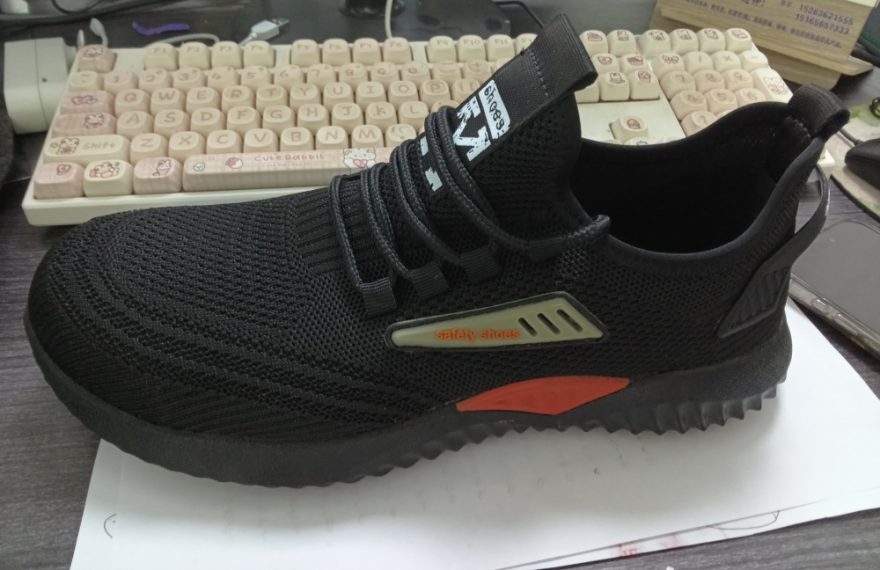
Many buyers have seen photos of safety shoes factories in China.
But very few actually understand how the real production workflow works inside.
I work in a safety shoes factory in northern China, and over the years I’ve walked through the production line hundreds of times — from raw materials to container loading.
In this article, I’ll show you what really happens inside a Chinese safety shoes factory and how a pair of safety boots is produced step by step.
1. Raw Materials Inspection
Everything starts with materials.
Before production begins, our warehouse receives materials from different suppliers:
- Leather or microfiber upper material
- Steel toe caps or composite toe caps
- Kevlar or steel midsole
- Rubber / PU outsole
- Insole boards
- Lining materials
- Eyelets, laces and accessories
Each batch is inspected before entering the warehouse.
Typical checks include:
- Leather thickness and surface quality
- Steel toe impact resistance certification
- Outsole hardness and flexibility
- Midsole puncture resistance
If any material does not meet the standard, it cannot enter production.
For safety shoes, material control is critical because certification such as EN ISO 20345 depends heavily on material quality.
2. Cutting Department
Once materials are approved, the production process moves to the cutting department.
Large sheets of leather or microfiber are cut into different parts of the shoe upper:
- vamp
- quarter
- tongue
- collar pieces
Most factories use hydraulic cutting machines with metal cutting dies.
The operator places the die on the leather sheet and presses the machine to cut the shape precisely.
At this stage, workers also check for:
- color difference
- leather scars
- thickness variations
Good cutting control reduces waste and keeps the appearance consistent.
3. Stitching (Upper Assembly)
After cutting, the parts go to the stitching line.
Here dozens of sewing machines assemble the upper components:
- joining vamp and quarters
- stitching lining
- adding foam padding
- attaching eyelets and reinforcements
This is one of the most labor-intensive steps.
In a typical safety shoes factory, a stitching line may have 40–60 workers, each responsible for one small operation.
The quality control team regularly checks:
- stitch density
- thread tension
- seam strength
Poor stitching can cause early failure during use, so this stage is closely monitored.
4. Lasting Process
Once the upper is finished, it moves to the lasting department.
The upper is placed over a shoe last (the mold that defines the shoe shape).
Then the machine pulls and fixes the upper tightly onto the last.
At this stage several components are inserted:
- steel toe cap
- midsole (steel or Kevlar)
- toe puff and heel counter
This step ensures the safety shoe has the correct structure and protection.
5. Sole Attachment
Depending on the production technology, factories may use different methods.
The most common methods are:
PU Injection
Liquid PU is injected into the mold and forms the outsole directly with the upper.
Advantages:
- good bonding strength
- lighter weight
- faster production
Cement Construction
The outsole is glued to the upper using industrial adhesive and heat pressing.
Advantages:
- flexible outsole choices
- suitable for rubber outsoles and special designs
Both methods require strict temperature and pressure control.
6. Finishing and Cleaning
After the sole is attached, the shoes enter the finishing line.
Workers perform final operations such as:
- removing excess glue
- cleaning the upper surface
- polishing leather
- inserting insoles
- lacing the shoes
Each pair is visually inspected before packaging.
Small cosmetic issues are corrected here.
7. Quality Control (AQL Inspection)
Before shipment, the QC team performs final inspection based on AQL standards.
Typical inspection items include:
- toe cap position
- outsole bonding strength
- size measurement
- logo and labeling accuracy
- packaging condition
For export orders, third-party inspection companies may also check the goods before shipment.
This ensures the batch meets the buyer’s quality requirements.
8. Packaging and Container Loading
Once inspection is approved, the shoes go to the packing area.
Standard export packaging usually includes:
- individual shoe box
- silica gel desiccant
- moisture protection paper
- master cartons
Moisture control is very important, especially for sea shipments.
Factories also place desiccants inside the container to prevent mold during long transportation.
9. Shipment
Finally, the cartons are loaded into containers and transported to the port.
For most northern China factories, shipments usually leave from:
- Qingdao Port
- Tianjin Port
From there, safety shoes are shipped worldwide to distributors, brands, and industrial suppliers.
Final Thoughts
From outside, a safety shoe may look simple.
But inside a factory, producing it involves many detailed steps — material control, stitching quality, structural assembly, and strict inspections.
Understanding the real workflow helps buyers:
- choose reliable suppliers
- avoid quality risks
- communicate technical requirements more effectively
If you are sourcing safety shoes from China, visiting the factory and walking through the production line can tell you far more than a catalogue.