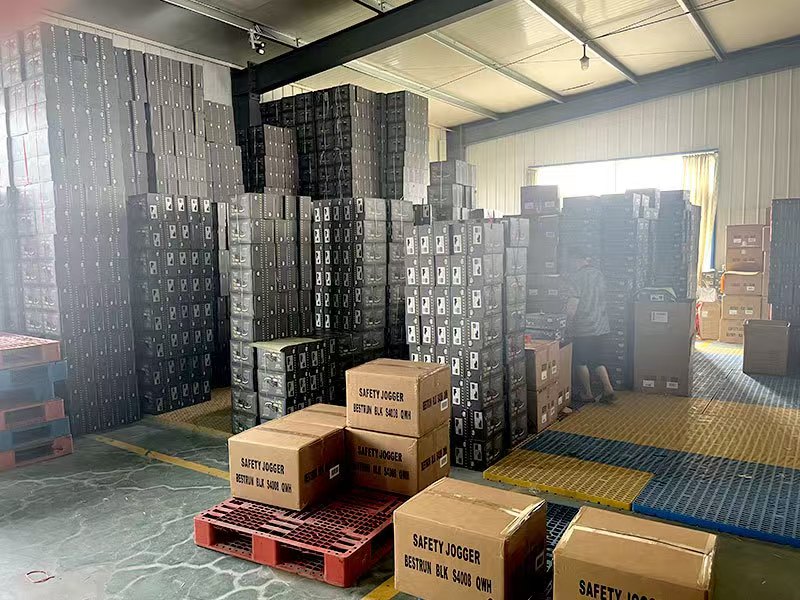
Why I Became Obsessed with Pre-Shipment Checklist Verification
After years in international trade, I’ve learned something the hard way:
Most shipments don’t fail because of product quality — they fail because of small compliance details.
One of the most underestimated ones?
Labeling.
To many factories, a label is a minor issue:
a missing line, a wrong symbol, the language order slightly off.
But to customs authorities — and to serious buyers —
a label is part of the compliance documentation.
And a wrong label is simply non-compliance.
Why Label Problems Always Explode at the Worst Moment
I’ve seen this scenario too many times:
- The shoes are well made
- Test reports are valid
- Packaging samples were approved
And then — the shipment arrives.
Customs inspects the labels.
Suddenly, problems appear:
- CE marking size doesn’t meet requirements
- Safety category on the label doesn’t match the test report
- Language versions are incomplete
- Model codes differ from commercial documents
Customs doesn’t care how hard you worked.
They only care about whether the shipment is compliant at the port.
And the buyer asks a simple but painful question:
Why wasn’t this checked before shipment?
Customs Holds and Returns Always Come Back to the Supplier
Many newcomers think:
“Customs is just being strict.”
In reality, responsibility almost always flows back through the supply chain.
If a shipment is delayed, relabeled, or returned due to labeling issues:
- Who confirmed the label content?
- Who did the final shipment review?
- Why wasn’t the mismatch discovered earlier?
At that point, it’s no longer about a mistake.
It’s about missing risk control.
The Real Problem: Incomplete Audits
Here’s an uncomfortable truth:
Many “audits” only check systems — not shipments.
- Customer audits focus on management frameworks
- Factory audits focus on production
- Sales teams assume “we’ve shipped this before, so it should be fine”
Label compliance falls into the gap.
Invisible — until it fails.
What I Changed: Treating the Pre-Shipment Checklist as a Firewall
After dealing with real losses, I changed one habit:
Every shipment must pass a pre-shipment checklist — no exceptions.
Not a complicated system.
Just a disciplined one.
I don’t ask “Is this okay?”
I ask “Has each item been verified?”
I focus on four areas:
- Label Content
- Product name, model, size
- Safety category matches the test report
- Correct CE / UKCA / market markings
- Label Format
- Size, placement, language order
- Latest regulatory version applied
- Document Consistency
- Label vs test report
- Label vs invoice
- Label vs packing list
- Market Reality
- Is this label sellable — or clearable?
If one point is uncertain,
the shipment doesn’t move.
This Isn’t Perfectionism — It’s Risk Awareness
Some people say this is too slow, too detailed.
I see it differently.
Professional trade isn’t about shipping products.
It’s about stopping problems before your customer ever sees them.
When you do that consistently, clients don’t notice the effort.
They only notice:
- Stability
- Professionalism
- Reliability
Final Thought
Label errors, customs holds, returns, audit pressure —
these are not separate problems.
They usually come from one source:
No systematic pre-shipment verification.
I’d rather slow down slightly
than leave the outcome to “it should be fine.”