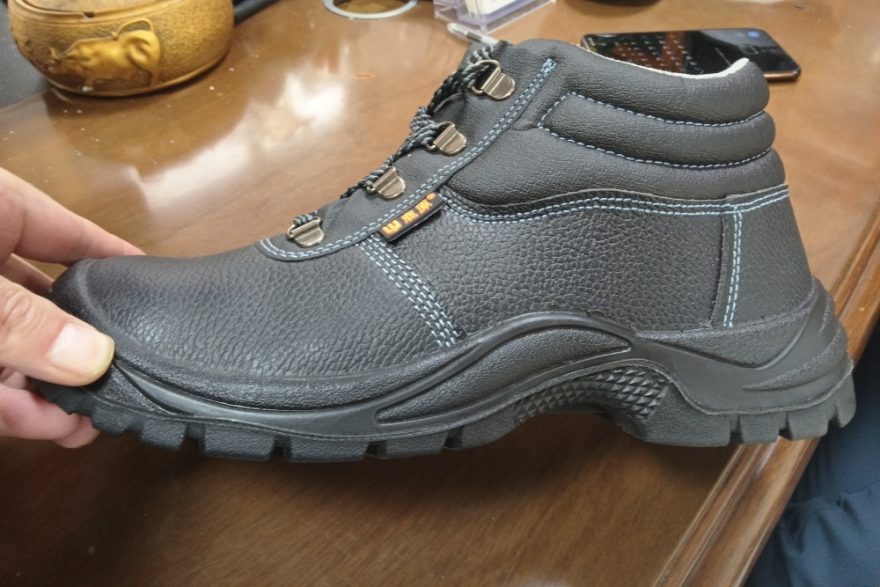
After working with several safety shoe factories over the years, I started noticing a pattern that appears again and again.
Most serious problems in a factory do not start as big problems. They usually begin as very small issues — something that could have been fixed in a few hours if someone had simply raised their hand and said, “Something isn’t right.”
But that rarely happens.
Instead, the issue stays quiet for a while. Production continues. And by the time someone finally reports it, the problem has already grown into something much more difficult to deal with.
The moment when a problem is first noticed
In many factories, workers on the production line are actually the first people to notice when something is wrong.
It might be a steel toe cap that doesn’t fit perfectly.
Maybe the rubber outsole compound feels slightly different from the previous batch.
Sometimes the leather thickness is inconsistent, or the waterproof membrane doesn’t bond properly.
None of these problems are unusual in footwear manufacturing. In fact, they happen in almost every factory at some point.
The real question is not whether problems appear.
The real question is whether people feel safe reporting them.
Why many workers choose to stay silent
In some factories, employees hesitate to report issues early. Not because they don’t care about quality, but because they worry about the consequences.
Someone might think:
“If I report this, will the supervisor blame me?”
“Will the boss think I made a mistake?”
“Maybe it’s not serious. Maybe the customer won’t notice.”
So the safest choice, at least in their mind, is to keep working and hope the issue disappears.
Unfortunately, manufacturing problems rarely disappear by themselves.
How a small issue slowly grows
A typical scenario looks like this.
A stitching operator notices that the thread tension is unstable. If production stopped at that moment, perhaps only a few dozen pairs would be affected.
But production continues.
A few hundred pairs are completed.
Then a thousand.
Sometimes several thousand.
Eventually QC finds the problem during inspection. At that stage, the factory has only a few options: rework the shoes, reproduce the order, or delay shipment.
And once the problem reaches the export stage, it is no longer just a quality issue.
It becomes a business problem.
Customers may have already scheduled shipping space, warehouse delivery, or even promotional campaigns. A delay at that moment creates pressure for everyone involved.
What well-managed factories do differently
In some factories with stronger management systems, the culture is quite different.
Workers are encouraged to report problems as early as possible. Finding a problem is not considered a failure. Hiding it is.
This simple difference changes the entire atmosphere inside the factory.
A stitching worker might say immediately, “The thread tension looks wrong.”
Someone in cutting may point out that the leather thickness is inconsistent.
QC teams get involved earlier. Instead of discovering problems after thousands of pairs are finished, they intervene when production has just started.
For the export team, this makes a huge difference. Early information means there is still time to communicate with the customer, adjust schedules, or correct the process.
Why many European brands care about this
During supplier audits, many European safety footwear brands pay close attention to how factories handle internal problems.
They look at things like non-conformity reports, isolation procedures for defective products, and corrective action records.
These systems are not just paperwork. Their real purpose is simple: to make sure problems are discovered early.
Because in manufacturing, the earlier you find a problem, the cheaper it is to fix.
A simple but effective idea
Some factories introduce a very simple rule: reporting problems early is encouraged, not punished.
When workers know they won’t be blamed for raising concerns, they become more willing to speak up. Sometimes factories even reward employees who identify potential risks before production continues.
Over time, the mindset shifts from “avoid being blamed” to “identify the problem first.”
A lesson many people in export overlook
People working in international trade often focus on finding customers, negotiating prices, and closing orders.
But long-term cooperation with overseas buyers depends on something less visible: how transparent the factory is internally.
In my experience, the most reliable factories are not the ones that never have problems.
They are the ones where problems never stay hidden for long.
And in manufacturing, that small difference can decide whether a supplier relationship lasts for years — or ends after a single shipment.