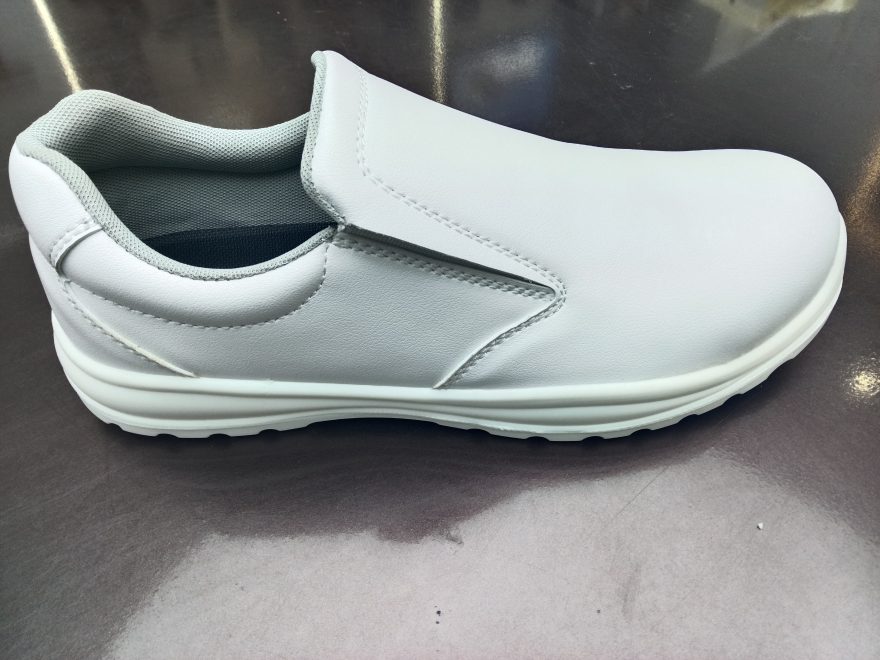
In safety footwear, most sourcing discussions start the same way — price, leather quality, outsole design, lead time.
But the biggest risk is usually not visible.
It’s inside the shoe.
Steel toe caps.
Composite toe caps.
Penetration-resistant midsoles.
These components are what actually determine compliance with EN ISO 20345. And they are also where shortcuts happen.
I’ve seen cases where:
- The approved sample passed testing, but bulk production used a different toe cap supplier.
- The penetration plate thickness was slightly reduced to control cost.
- Materials were stored improperly and affected by humidity.
- Different batches were mixed during production.
From the outside, everything looked fine.
Until testing failed.
And when impact or penetration resistance fails, it’s not a minor issue. Shipments get rejected. Goods get held. Claims start. Sometimes brands don’t recover from that kind of damage.
What many buyers don’t realize is that certification applies to the tested sample — not automatically to every production batch.
That gap is where risk lives.
Certificates Don’t Control Production. Systems Do.
When I review a factory, I’m less interested in hearing “We have CE.”
I want to know:
- Do you have in-house impact and compression testing equipment?
- How do you manage batch traceability?
- Are toe caps sourced from a fixed, approved supplier?
- Do you test every batch or only when necessary?
If a factory relies entirely on external labs, production control becomes reactive. Problems are discovered after production — not prevented during it.
There’s a difference between being certified and being controlled.
And in PPE, that difference matters.
Safety footwear is not a fashion product. If something fails, it becomes a liability issue, not a quality discussion.
In my experience, the real risk in safety shoes is rarely the upper.
It’s what you don’t see.